LOCAL SEO RESOURCES
AI SEO vs Traditional SEO: What Changes and What Stays the Same
Compare AI SEO and traditional SEO across research, content, technical work, local search, measurement, quality control, and team responsibilities.
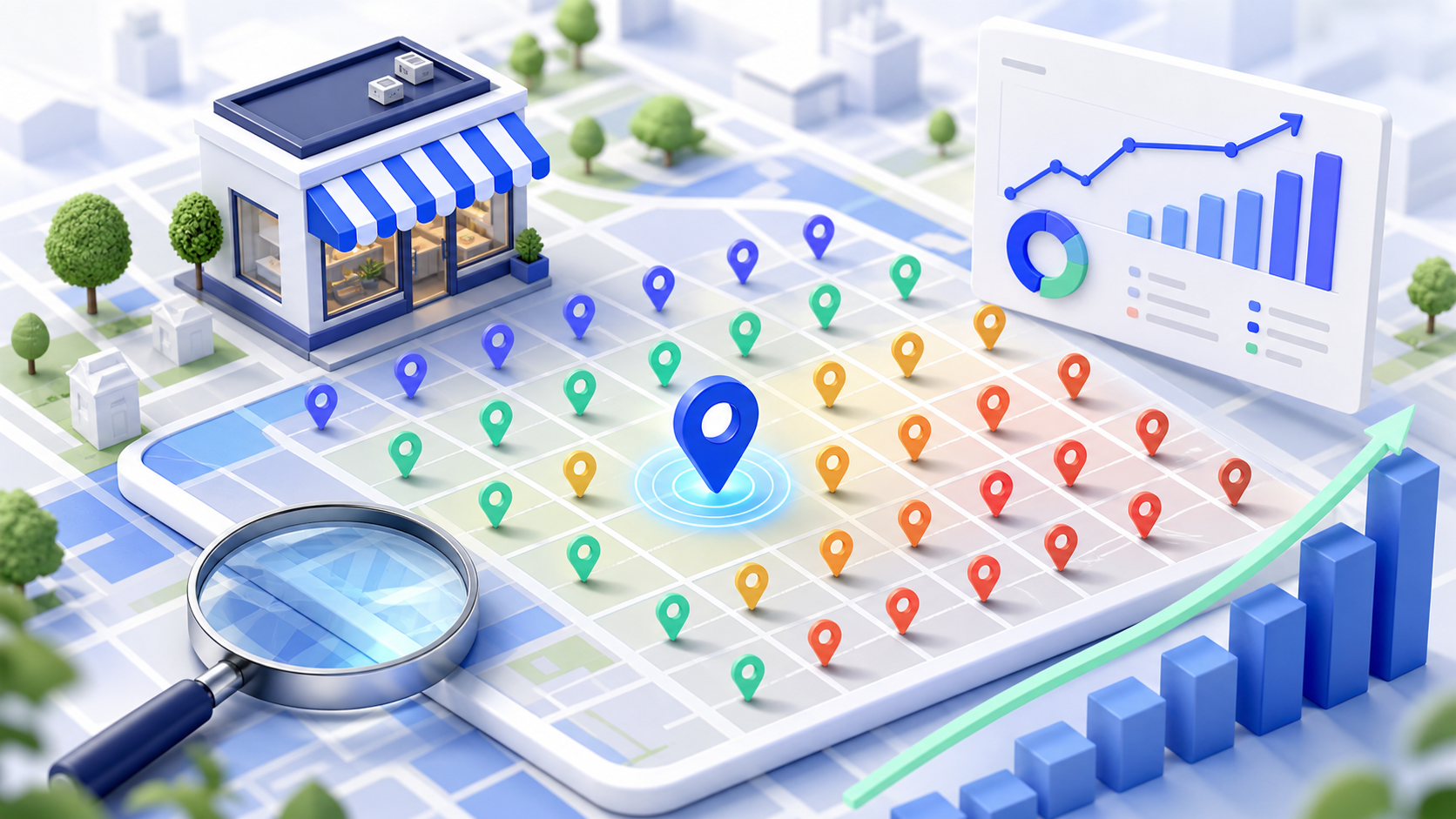
AI SEO does not replace traditional SEO. It changes how quickly teams can collect evidence, find patterns, prepare drafts, and maintain recurring work. The parts that create durable value—accurate facts, technical accessibility, customer understanding, original evidence, authority, and editorial judgment—remain essential.
AI SEO vs traditional SEO at a glance
| Work | Traditional workflow | AI-assisted workflow |
|---|---|---|
| Research | Manual exports, spreadsheets, SERP reviews, and clustering | Automated grouping and summaries reviewed against source data |
| Content | Writer develops every draft from notes and research | AI prepares a draft or outline from verified inputs; editor owns accuracy |
| Technical SEO | Manual crawls and issue triage | AI helps explain and prioritize crawl findings; engineers still implement safely |
| Local SEO | Separate rank, GBP, review, and posting tools | One operating layer can connect findings to weekly actions |
| Measurement | Analyst reviews reports and writes summaries | AI drafts summaries; analyst checks distortion, causation, and business value |
What stays the same
Search intent still matters
A page must solve the job behind the query. A comparison query needs a fair comparison. A free-tool query needs an accessible tool. A local-service query needs evidence that the business provides that service in the relevant market. AI cannot compensate for an intent mismatch.
Crawlability and canonical signals still matter
Search engines still need a successful response, indexable content, consistent canonical URLs, useful internal links, and clean redirect behavior. AI can help identify conflicts, but it does not remove the requirement.
Authority still has to be earned
Original data, customer results, expert explanations, product demonstrations, citations, mentions, and genuinely useful resources give other sites and answer engines a reason to reference a page. Generating more generic text is not authority.
People remain responsible
A named editor or subject expert should be accountable for claims, customer privacy, competitor facts, and the final recommendation. This is especially important for legal, medical, financial, and safety-related pages.
What AI changes
Pattern recognition becomes faster
AI can group thousands of Search Console queries, identify recurring themes, and highlight pages with high impressions but weak click-through rates. The analyst still checks whether impressions are distorted by irrelevant queries, automated rank checking, or positions with no realistic visibility.
First drafts become cheaper
A strong brief can become a usable first draft quickly. That makes original inputs more—not less—important. Customer interviews, product screenshots, campaign records, verified pricing, and real examples are what separate the final page from every other AI-generated summary.
Recurring work becomes easier to maintain
For local businesses, consistency is often the bottleneck. An AI local SEO workflow can connect rank changes, profile gaps, posts, and reviews to the next weekly action instead of forcing an owner to interpret several dashboards.
Where traditional SEO is still the better default
- Final legal, medical, financial, or safety review
- Customer interviews and permission
- Original research design and interpretation
- Brand positioning and difficult editorial decisions
- Engineering changes with production risk
- Relationship-based digital PR and partnerships
Where AI creates the largest leverage
- Query and page clustering
- Finding content overlap and stale claims
- Turning a verified brief into alternative outlines
- Drafting structured FAQs from real customer questions
- Summarizing weekly rank and profile changes
- Preparing review replies for human approval
- Maintaining internal-link and refresh checklists
The best model is supervised AI SEO
The strongest workflow is neither fully manual nor fully automated. It gives AI access to accurate inputs and repetitive work, while a person owns the goal, evidence, approval, and measurement. For local businesses, that can look like this:
- Track priority searches across the real service area.
- Use AI to summarize gaps and propose actions.
- Approve the actions that match the business and customer.
- Draft profile or content updates from real facts.
- Review and publish.
- Measure visibility and leads without promising causation.
See the full AI SEO guide for local businesses or explore LocalPanda’s weekly AI task workflow.
Choose tools for the next step
To evaluate these capabilities in a product, compare AI local SEO tools, inspect Google Maps measurement and review AI Search visibility as separate data sources.